
Salvador Dalí Jesus painting
Many of us grew up with a crucifix or a sacred image watching over the living room or the hallway. As adults, we sometimes look for art that still honors that same faith, but speaks gently to our present life. A Salvador Dalí Jesus painting can do that in a quiet, unexpected way: the familiar figure of Christ, seen through the eyes of a modern artist, yet still inviting prayer, thought, and silence.
In my own home, I have one Dalí image of Christ that hangs near my desk. I do not stare at it all day, and it is not dramatic or overwhelming. But when I pause before starting work, or when I end a long day, that image helps me remember that the Lord is present in the ordinary and the messy, not only in the obviously “holy” moments. It is simply there, like a steady companion in the background.
On this page, I’ll share some reflections on how a Salvador Dalí Jesus painting can fit naturally into a Catholic home in the United States today—how it might accompany morning prayer, family life, or even the quiet of a late evening, without pressure or expectations. This is not about decorating in a stylish way, but about giving a small place to Christ’s presence in our daily routine.

Why a Salvador Dalí Jesus painting belongs in an ordinary Catholic home
For many American Catholics, sacred images are almost like quiet family members. A picture of the Sacred Heart in the kitchen, a small statue on a bookshelf, a crucifix above the bed—these things are woven into ordinary life. A Salvador Dalí Jesus painting can sit right alongside those simple devotions, even if the artistic style feels more modern.
When I first saw one of Dalí’s depictions of Christ, I was surprised by how peaceful it felt. I expected it to be strange or distracting, because I associated Dalí with surreal art. But when the focus is the Lord on the cross, or the Lord seen from above, there is a kind of stillness that draws you in. It does not replace a traditional crucifix, but it can rest near it, offering a different angle on the same mystery.
Many people already know Dalí from broader culture and art history. If you want to understand more about him as an artist beyond this devotional context, you can also read about him on Salvador Dalí. Knowing a little bit of his background can give you a deeper appreciation for the tension between the modern and the sacred in his work.
A print of Christ by Dalí does not have to “prove” anything. It can simply be one more way to keep the Lord in front of your eyes during the day, especially if you tend to connect more easily with visual things than with long written prayers. For some people, a modern image like this feels closer to their own world: they see the same faith they grew up with now expressed in a style that feels like it belongs to their lifetime.
Placing a Salvador Dalí Jesus painting in your home
One of the most practical questions is simply: where do you put it? In my own case, I have moved my Dalí print a few times. It started in the hallway, then the living room, and finally found its place near the small corner where I keep my Bible and a candle. Each spot changed the way I related to it.
Here are a few gentle ideas that might help you decide where a painting like this could fit:
- Near your prayer chair or corner: If you have a simple place where you sit to pray, read Scripture, or just breathe after a long day, hanging the painting nearby can create a quiet focal point.
- In the living room: For families, placing the image where people regularly pass by can keep Christ at the center of daily life—without needing any words.
- By a home office or workspace: Many of us work long hours from home. Having the Lord’s image near your desk can be a wordless reminder to bring your worries, deadlines, and conversations into His hands.
- In a hallway or entryway: Seeing Christ as you leave the house in the morning or come home at night can become a small, steady habit of remembrance.
When you hang a Salvador Dalí Jesus painting, there is no strict rule. It does not need to be the center of the room or lit dramatically. Often, it works best in a place where you can catch it with the corner of your eye, letting it gently draw you into prayer when your heart is ready.
Different visual moods of Dalí’s Christ images
Not every Dalí-inspired print of Jesus feels the same. Some focus on the height and perspective of the cross, some bring the face of Christ closer, and others set Him in a broader, almost dreamlike scene. Each one can speak in a slightly different way to your own spiritual temperament and daily life.
When I chose my own Salvador Dalí Jesus painting, I paid attention not so much to the artistic details, but to how my heart reacted when I looked at it quietly for a minute. Did it leave me restless or peaceful? Did it distract me, or did it almost naturally lead me toward a simple prayer like “Lord, stay with me”?
Below are a few more visual options, each with its own tone. You might notice that some feel more intense, others more serene. It is okay to be honest with yourself about which atmosphere you want to bring into your home.




Living with a Salvador Dalí Jesus painting day by day
Having sacred art at home is less about the first moment you hang it up and more about the quiet years that follow. A Salvador Dalí Jesus painting can slowly become part of the background of your life, showing up in small, almost unnoticed ways.
On some mornings, I make coffee before sunrise and sit for a minute facing that image. I do not always manage a long, focused prayer. But simply seeing Christ present above my little table reminds me that my whole day rests in His hands. Sometimes I whisper a short Scripture verse or just say, “Lord, you know what is coming today.”
In the evening, the same painting looks different in the softer light. After a long day of work, errands, and all the small frustrations, I find that looking up at Christ for even a few seconds can calm the noise inside a bit. I do not expect a sudden change in my feelings, but I sense that I am not carrying everything alone.
Families might experience this in their own way. Children may ask questions about the unusual perspective or colors. Those questions can open natural conversations about who Jesus is and why the cross matters, without needing a formal lesson. A modern image can sometimes draw the curiosity of a teenager more easily than a picture they feel they have “seen a thousand times.”
Over time, the Salvador Dalí Jesus painting can gather memories: the night you came home from the hospital and sat under it to breathe, the morning you received difficult news and paused there for strength, the simple Sundays when the house was peaceful and you rested with gratitude. The painting itself is not magic, of course, but it quietly witnesses your story with God.
Combining Dalí’s Christ with other devotional items
Many Catholic homes do not have just one sacred image. There might be a crucifix, a rosary hanging on the wall, a statue of Mary, or a small image of a favorite saint. A Salvador Dalí Jesus painting can sit peacefully among these without needing to stand out.
Here are a few simple ways to integrate it into a broader devotional space:
- Beside a traditional crucifix: Having both near each other can show the continuity between the rich tradition of the Church and the more modern language of contemporary art.
- Above a small table with a candle: Lighting a candle under the painting for a few minutes each evening can become a gentle family ritual of entrusting the day to the Lord.
- Near a Bible or prayer book: When you sit down to read Scripture, glancing at Christ on the wall can help your mind settle and your heart become a little more present.
- Alongside family photos: This quietly reminds everyone that Christ belongs in the family story, not just in the “religious” corner.
Personally, I find that keeping my Salvador Dalí Jesus painting near my rosary stand makes it easier to pick up the rosary in the first place. When I see the Lord portrayed with such depth and tenderness, it becomes more natural to turn to Him in the mysteries, even if my prayer is imperfect and distracted.
More visual variations to reflect prayer and mood
Sometimes the same subject—Christ on the cross, or Christ seen from above—can be printed in different formats, sizes, and color tones. A brighter piece might feel at home in a sunny living room, while a more muted or darker version could fit a quiet study or bedroom.
You may find it helpful to imagine where the painting will hang before choosing the specific print. Think about the wall color, the natural light, and the other objects nearby. You are not decorating to impress anyone; you are simply trying to create a space where your heart can rest in the Lord more easily.
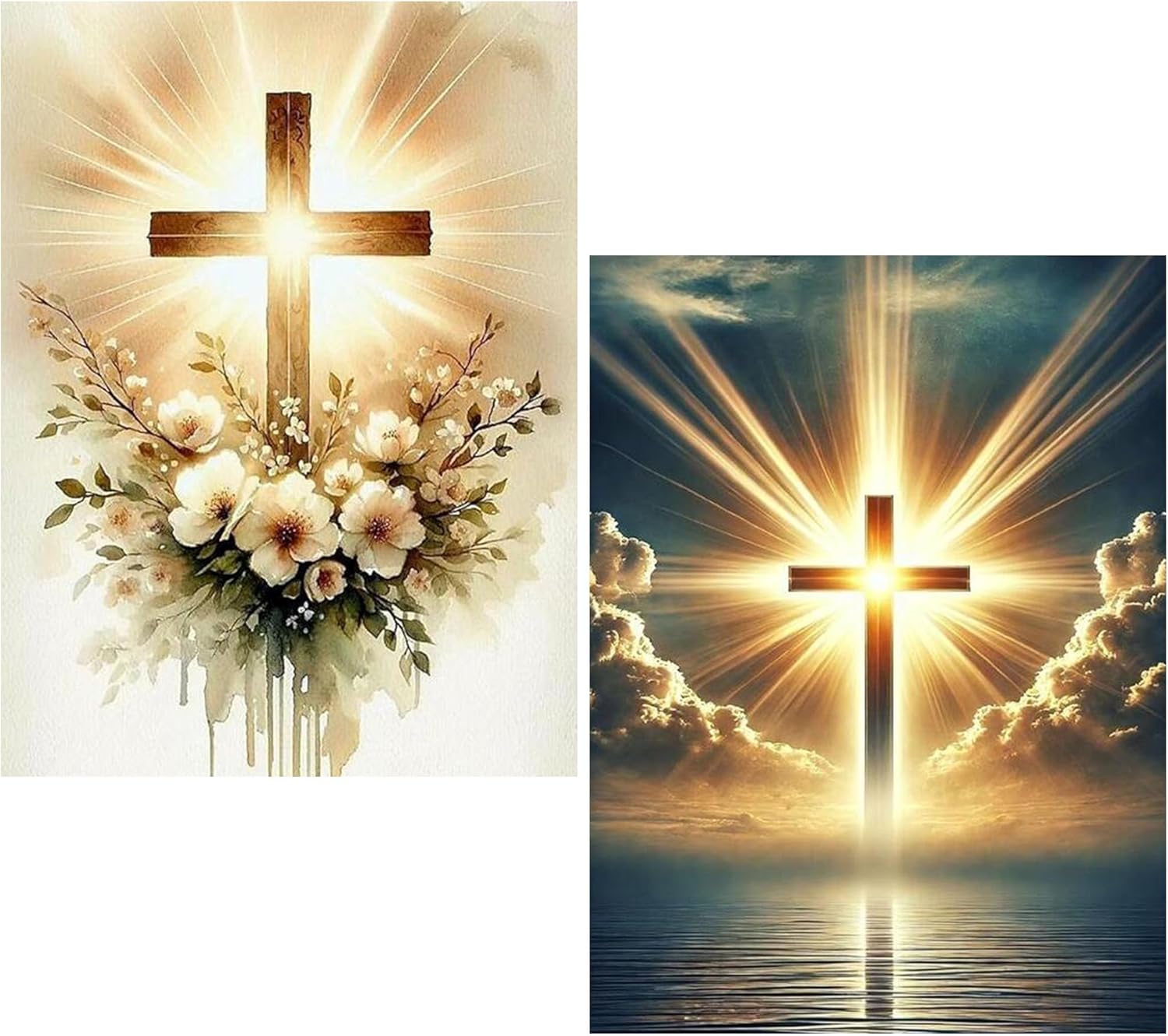

Over the years, I have noticed that my own response to the Salvador Dalí Jesus painting on my wall changes with what is happening in my life. On some days, the strong angles of the cross feel like a shelter. On others, the quiet face of Christ feels like a friend listening without judgment. The painting stays the same, but what it awakens in my heart can vary, and that is part of living with sacred art over time.
Frequently asked questions about using a Salvador Dalí Jesus painting devotionally
Is a Salvador Dalí Jesus painting “Catholic enough” for a prayer corner?
For many Catholics, yes. The key is not whether the style is classical or modern, but whether the image truly helps you remember Christ and turn your heart toward Him. If a Dalí image of Jesus leads you into honest prayer, gratitude, or trust, then it can be very fitting for a prayer space. Some people choose to pair it with a traditional crucifix so that both artistic languages are present together.
How can I pray in front of a Salvador Dalí Jesus painting?
You do not need any special method. You can simply sit quietly and look at the Lord for a minute or two. You might repeat a short prayer like “Jesus, I trust in you,” or pray a decade of the rosary while glancing from time to time at the image. Sometimes I just bring to mind one person I am worried about and entrust them to Christ while looking at the painting. The main thing is sincerity, not perfection.
Is it appropriate to hang this kind of painting in a bedroom?
Many Catholics do keep an image of Christ in their bedroom, often above the bed or on the wall they see first thing in the morning. A Salvador Dalí Jesus painting can work well there, especially if it helps you begin and end the day with a brief moment of prayer. If you find the image too intense for a resting space, you might prefer it in a hallway or living room instead. It really depends on your personal sense of peace.
Can a modern painting like this help children or teenagers grow in faith?
It can, in a gentle and indirect way. Young people often notice unusual or striking images more easily than those they have seen many times. A Salvador Dalí Jesus painting might spark questions, conversations, or simple curiosity that opens the door to deeper topics. You do not need to use it as a tool or lesson; just let it be present, and take advantage of any natural moments when they ask what it means.
What size is best for a Salvador Dalí Jesus painting in a home?
There is no single “best” size. A smaller print can work well in a bedroom, hallway, or prayer corner, while a medium or larger size might fit a living room or entryway. I usually think in terms of balance: the painting should be large enough to be seen clearly, but not so large that it overwhelms the room. Sometimes taping a piece of paper to the wall in the approximate size can help you imagine how it will feel.