
A gentle reflection on how a Mary and Jesus painting can find its place in a normal home, where faith is lived in small, steady ways throughout the day.
Mary and Jesus painting
For many of us, a simple Mary and Jesus painting hanging on the wall is more than decoration. It becomes part of the rhythm of the day: a place where the eyes rest for a moment, a reminder to breathe, and a quiet invitation to remember that we are not alone. It does not need to be grand or expensive. It just needs to be there, steady and faithful, like a friend who sits in the corner of the room and never rushes us.
I still remember the first time I brought a Mary and Jesus painting into my own home. I was not trying to redesign the space or make it look especially “religious.” I simply wanted something on the wall that would gently turn my thoughts toward prayer, especially on tired evenings. Over time, I noticed that I would pause for just a second when walking past it, especially when the day felt heavy. Those small pauses did not change my life overnight, but they slowly shaped how I carried my worries and how I spoke to God in my heart.

What a Mary and Jesus painting can mean at home
In many Catholic homes, a picture of Mary holding Jesus is one of the first things you notice when you walk in. There is something tender and steady about it. The image does not shout; it simply holds a scene that the heart recognizes. It can be a reminder of family, of trust, of God quietly entering daily life.
A Mary and Jesus painting often shows the Child held close, sometimes asleep, sometimes looking outward. In these images, some people find comfort when family life feels chaotic or when they are worried about their children. Others simply like having a peaceful image above the dining table, in the hallway, or by the front door. It is not about impressing visitors; it is about letting the home gently speak of faith and love.
When I first hung a Mary and Jesus painting in my living room, I did not expect anyone to notice. But a friend came over and, after a while, said quietly, “That picture makes this room feel warm.” I realized then that even people who are not used to Catholic images can feel something simple and kind in a scene of a mother holding her child. The painting became part of the space without forcing anything.
Many Christians, including Catholics, have long kept images like these in their homes. If you are curious about this practice in a broader historical sense, you might find the story of the tradition of the Madonna in art interesting to explore.
Placing a Mary and Jesus painting in your home
Choosing where to place a Mary and Jesus painting can be a gentle spiritual decision as much as a practical one. It helps to ask: Where do I most need a quiet reminder to turn my heart toward God? For some people, that is the entryway. For others, it is the kitchen, the living room, or even a small corner of the bedroom.
Common places people choose
- Near the front door – as a way of entrusting coming and going to God.
- Above a prayer corner – to give a clear focal point for reflection.
- In the bedroom – especially near a bedside table or a chair used for evening prayer.
- In the hallway – a subtle place that everyone passes by more than once a day.
- In a family room – where daily life and faith naturally mix together.
In my own small apartment, I first placed a Mary and Jesus painting above a simple table where I kept a Bible, a small crucifix, and a candle. I found that it helped give that corner a sense of purpose. It reminded me to pause for a moment in the morning before opening my phone, and sometimes at night before going to bed. It was not dramatic or intense; it was just a small anchor in the day.
You do not need a special room or a large house. Even in a small space, a painting like this can create a gentle “quiet spot” where your heart can slow down for a moment. What matters is not the size of the painting but the intention with which it is placed.
Different styles of Mary and Jesus paintings
There is no single “right” style for a Mary and Jesus painting. Over the years, artists have painted them in many ways: traditional, modern, colorful, muted, detailed, or very simple. Choosing a style is often about what helps you pray and what fits naturally into your home.
More traditional styles
Traditional paintings often show Mary with a veil, gently holding Jesus, with soft colors and a peaceful atmosphere. These are common in older churches and Catholic homes. Many people appreciate how they connect them with their childhood parish or with grandparents’ homes where a similar image hung in the living room.

Softer, modern interpretations
Some paintings have a more modern look, using lighter backgrounds or slightly abstract lines. They still show Mary and Jesus clearly, but with a style that can blend easily into a contemporary home. These can work especially well in apartments or homes where you want the image to feel simple and uncluttered.

Warm colors and family spaces
Warm colors often make a Mary and Jesus painting feel especially at home in family rooms and dining areas. Earth tones, soft golds, and gentle light can help the image feel welcoming without demanding attention. This can be helpful in spaces where children play, people talk, and the television is sometimes on. The painting can quietly share the space without feeling out of place.

Living with a Mary and Jesus painting day by day
There is something almost quieting about getting used to a Mary and Jesus painting that has been on your wall for a while. At first it feels new; later, it simply belongs. It becomes part of everyday life: you glance at it while pouring coffee, straightening the couch, or getting ready for work. Little by little, those glances can become short prayers, barely spoken, like “Thank you,” or “Please help,” or “Stay with us today.”
I noticed this in my own routine. For a long time, I carried my worries about work and family inside, not really naming them. One evening, after a difficult phone call, I walked past the Mary and Jesus painting in the hallway. I did not even stop; I just looked up at it as I passed by and quietly said, “You know.” That became a habit. The painting became a place where I would silently admit what was on my heart, even if I did not have many words.
A Mary and Jesus painting can also help children grow familiar with holy images in a gentle way. They may ask who the people in the picture are. Their questions give simple openings to speak about Jesus, about Mary, and about love in a way that fits their age. The painting does not need to come with long explanations; it just needs to be present, steady, and kind.

Using a Mary and Jesus painting for quiet prayer
A painting cannot pray for us, and it does not replace the sacraments or the life of the Church. Still, a Mary and Jesus painting can gently help us turn toward God. Sometimes, when words do not come easily, simply sitting in front of an image and breathing slowly can help the heart open.
Simple ways to pray with the image
-
Begin with silence
Sit where you can see the painting. Take a few slow breaths. Notice the colors, the faces, the way Mary holds Jesus. Let the noise inside you settle even a little. -
Share your day
In your own words, tell the Lord what your day has been like. You can do this out loud or in your heart. The painting is just there to steady your gaze so your thoughts do not drift as easily. -
Offer a simple prayer
You might say the Hail Mary, speak with Jesus as with a close friend, or simply repeat a short phrase such as “Jesus, I trust in You,” or “Be with my family.” -
Rest in silence
After speaking, let there be a minute or two of silence. Look at the painting without forcing any thoughts. Just be there, as you might sit quietly with someone you love. -
End with gratitude
Before you leave, say “Thank You” in your own way—for the day, for your loved ones, or simply for the chance to pause.
I sometimes place a small candle below my Mary and Jesus painting in the evening. The soft light makes the room feel peaceful. When I blow the candle out before bed, it feels like a natural way of saying, “I leave this day in Your hands.” There is no special technique; it is simply an honest moment before God.
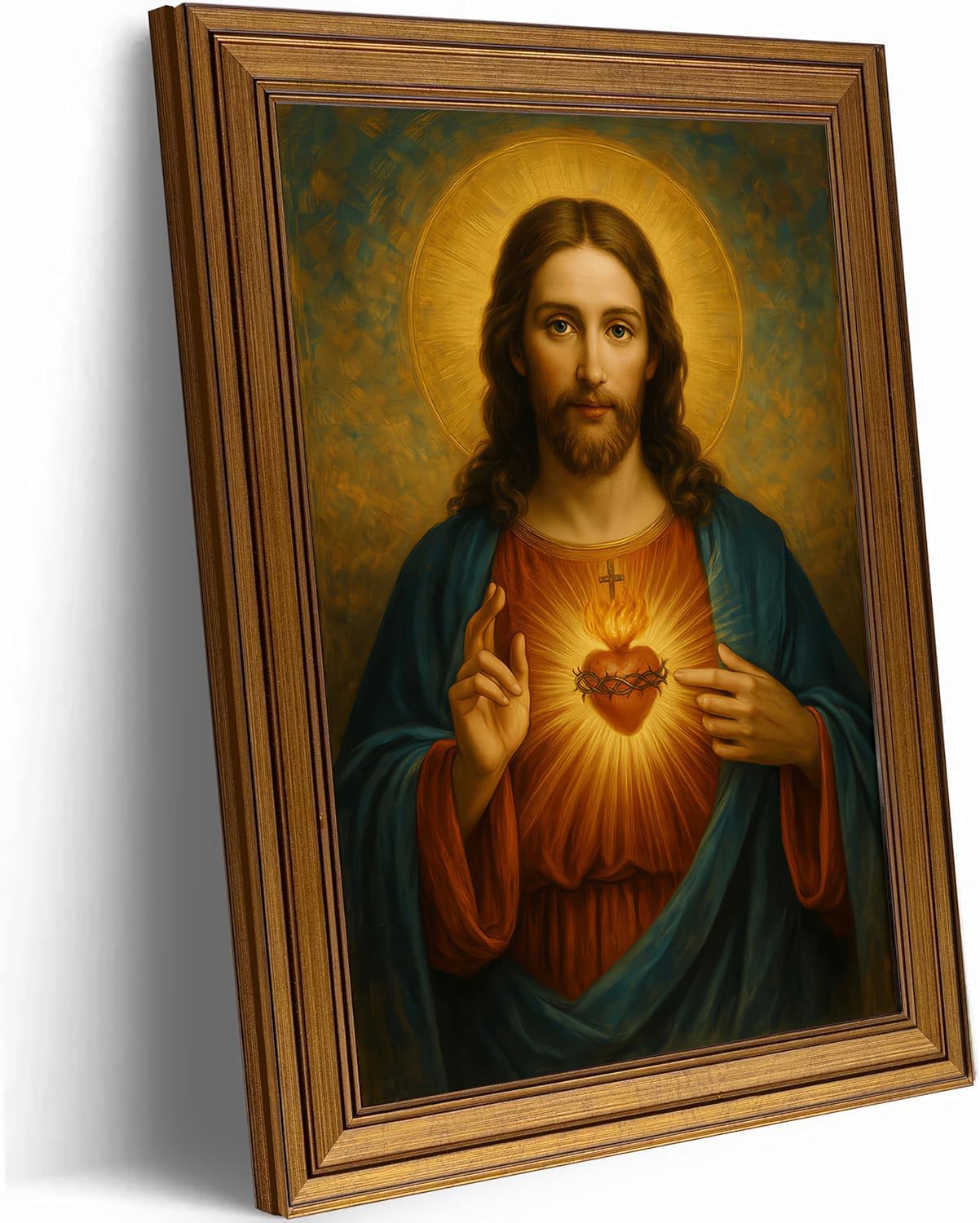
Caring for the painting with respect
Because a Mary and Jesus painting is used for prayer and reflection, it deserves simple respect in how we care for it. That does not mean we must treat it in a fearful way, but rather with the same gentleness we would show to anything that helps us draw closer to God.
- Keep it clean – Dust the frame regularly with a soft cloth so it does not feel forgotten.
- Choose a stable place – Hang it securely so it does not tilt or fall easily.
- Protect it from damage – Avoid placing it where it will get direct sunlight all day or high humidity.
- Surround it with simplicity – You might keep a small table, a candle, or a rosary nearby, without crowding the space.
Over time, I noticed that caring for my Mary and Jesus painting—wiping the frame, straightening it when it leaned a little—became a small act of devotion in itself. It reminded me that my faith, too, needs regular, ordinary care, not just big moments.
Choosing a Mary and Jesus painting thoughtfully
When choosing a Mary and Jesus painting, it helps to move slowly and pay attention to what truly speaks to your heart. Instead of asking, “Which one looks most impressive?” you might ask, “Which one helps me be still before God?” or “Which one would fit naturally into the quiet corners of my life?”
Here are a few gentle questions that might help:
- Do I feel at peace when I look at this image?
- Can I imagine glancing at it during an ordinary Tuesday, not just on special days?
- Will this style blend into my home in a way that feels honest and simple?
- Does the expression of Mary and Jesus help me open my heart in prayer?
One of my own experiences with a Mary and Jesus painting taught me this lesson. I once chose a very dramatic image because I thought it was “stronger.” After a few weeks, I realized it made me feel tense rather than peaceful. When I replaced it with a gentler painting where Mary simply held Jesus close, my prayer became calmer. Nothing miraculous happened; it just felt more like home.
