
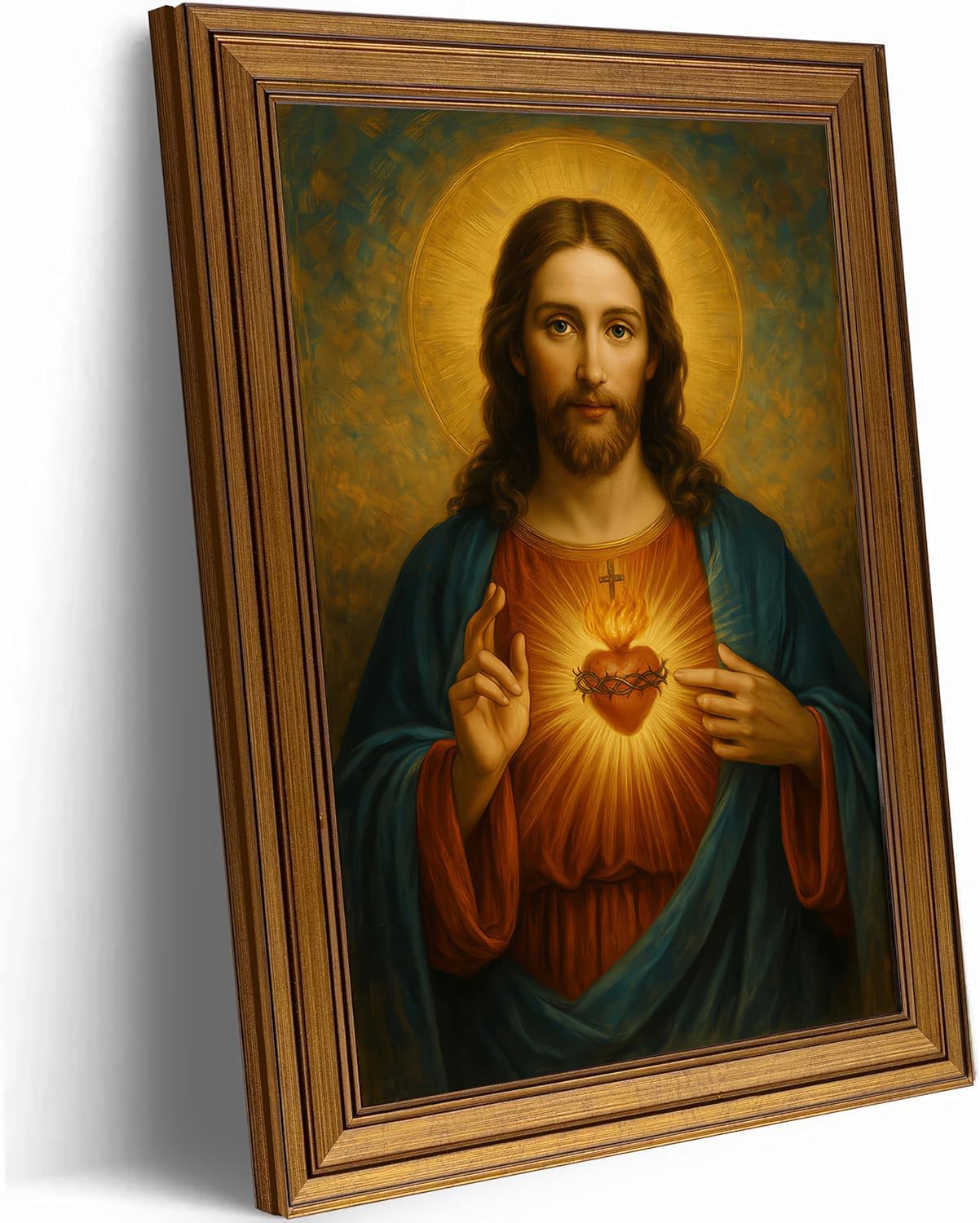
Jesus Prince of Peace painting
Jesus Prince of Peace Painting
A gentle image of Christ can quietly anchor a home. A Jesus Prince of Peace painting is not decoration first, but a humble reminder that the Lord is near, even in ordinary days filled with laundry, work, homework, and late dinners.
Over the years I have noticed how much the atmosphere of a room changes when there is a reverent image of Jesus on the wall. The space feels less random and more like a place of prayer, even if life is noisy and imperfect. A Jesus Prince of Peace painting, with His calm gaze and open heart, can gently invite us to pause, breathe, and remember that we are not alone.
When I first placed a painting of Jesus in our living room, I did not expect anything dramatic. I simply wanted a quiet reminder of the Lord in the middle of our everyday routines. Little by little, I found myself glancing at that image before answering a difficult phone call, or after a long day when my patience was thin. It did not solve my problems, but it helped me bring them to Him.
A sacred image like this can also create a small “prayer corner” without needing much space. A chair, a candle, a Bible, and a Jesus Prince of Peace painting on the wall can become a simple place to sit for ten minutes before bed, or to start the morning with a short prayer. Nothing complicated, nothing forced—just an honest moment with the Lord.
 I want to see it
This page contains affiliate links. If you click and buy, I may earn a commission at no extra cost to you.
What a Jesus Prince of Peace painting can mean at home
In many Catholic homes, sacred art is a quiet way of saying, “Christ is welcome here.” A Jesus Prince of Peace painting can serve as that silent greeting at the entrance, in the living room, or over the dining table. It does not demand attention, but it is always ready to meet our eyes when we lift them up.
For some families, this kind of image becomes a natural gathering point for prayer. Maybe the kids are restless and tired, the day has been long, and no one feels particularly holy. Still, lighting a small candle under the painting and saying one short prayer together can slowly become a family habit, something that quietly shapes the home over time.
I remember a season when work was overwhelming and my thoughts were constantly racing. Having a Jesus Prince of Peace painting above my desk did not remove the stress, but it helped me remember to whisper simple prayers: “Lord, be with me,” or, “Jesus, I trust in You.” That small habit softened the edges of some very hard days.
In Catholic tradition, sacred images are not worshipped, but they help lift our minds and hearts to God. A respectful, well-made painting of Christ can turn an ordinary wall into a gentle invitation to prayer. Even a quick glance while passing by can become a small act of faith: a nod of the heart toward the Lord.
Choosing a style of Jesus Prince of Peace painting
Every home is different, and so is every heart. When choosing a Jesus Prince of Peace painting, many Catholics quietly look for an image that speaks to their own way of praying. For some, that means a very traditional portrayal, with rich colors and a solemn expression. For others, a softer, more contemporary style feels more approachable.
One helpful question is simply, “Can I imagine praying in front of this?” If the answer is yes, the details often take care of themselves. The size, frame, and color palette matter, but the most important thing is whether the image gently draws you toward Christ rather than distracting you from Him.
Classic sacred art has a long history in the Church, especially in cultures shaped by Christian art. Many people feel anchored by this sense of continuity—knowing that believers for centuries have prayed with similar images. At the same time, there is room for simpler, modern prints that still show Jesus with reverence and humility.
I once chose a more muted, almost pastel version of a Jesus Prince of Peace painting for a small hallway that did not get much light. The softer tones blended gently with the space, and guests often paused there without quite knowing why. It became a discreet place to whisper a prayer before leaving the house.



Where to place a Jesus Prince of Peace painting
Where a painting hangs often shapes how we live with it. A Jesus Prince of Peace painting in the entryway can be the first thing you see when you walk in the door. Some families quietly trace a small sign of the cross when they come home, just glancing at the Lord and saying, “Thank You for bringing us back safely.”
In the living room, the painting can become a backdrop for everyday life—children playing on the floor, friends sharing coffee, late-night conversations. Without calling attention to itself, the image reminds everyone that Christ is present in those ordinary moments, not only at church or in times of crisis.
Other Catholics prefer to keep a Jesus Prince of Peace painting in a more private space: a bedroom, a hallway niche, or a small corner used for quiet prayer. A simple chair, a small table with a rosary and Bible, and the painting on the wall can turn a forgotten corner into a personal chapel where you can sit and breathe after a long day.
Over time, certain little gestures may grow around the painting almost without planning. A short prayer before leaving for work, a moment of silence after an argument, a glance toward Jesus before answering a difficult message—these are the kinds of daily movements that slowly shape a heart.

Living with a Jesus Prince of Peace painting day by day
A painting does not change a life on its own. But it can quietly support the habits that open our hearts to God. Many Catholics keep a Jesus Prince of Peace painting where they will see it at particular times: by the bed, near the kitchen table, or close to the door. Those little “encounters” can become moments to turn toward the Lord with very simple words.
In the morning, some people pause in front of the painting before leaving home and offer their day to Christ. In the evening, they might stop again to hand Him everything that went wrong, everything that went well, and everything left unfinished. The painting becomes a familiar face to turn toward, especially when prayer feels difficult.
I went through a period when formal prayers felt heavy and distant. During that time, the most honest prayer I could manage was to sit for a few minutes in front of a Jesus Prince of Peace painting and simply say, “Lord, You know.” No long speeches, no perfect words. Just staying there, quietly, felt like enough.
Families with children often find that a visible image of Jesus helps the little ones understand that faith is not only for church on Sunday. Kids may ask questions about the painting, or even talk to Jesus in their own childish way. Over time, that can help them feel that the Lord is part of their daily life, not a stranger they meet only on special occasions.
For those who live alone, a Jesus Prince of Peace painting can be a reminder that the house is never truly empty. The silent presence of Christ, even in painted form, can make a small apartment or quiet room feel more like a place of companionship rather than isolation.

Personal experiences with a Jesus Prince of Peace painting
My first experience with a Jesus Prince of Peace painting was in my grandparents’ home. The image hung above their small dining table, where we gathered for Sunday meals. As a child, I did not fully understand why it was there, but I remember the way my grandmother would sometimes glance up at it when the conversation turned serious or when someone shared something painful. Her eyes would soften, almost as if she were silently asking Jesus to stay close to us.
Years later, when I finally chose a Jesus Prince of Peace painting for my own home, I thought back to those meals. I wanted that same quiet sense that Christ was seated with us, listening to our stories, our laughter, and our worries. Now, on difficult evenings, I sometimes sit on the couch after everyone has gone to bed and look at the painting for a while. I do not expect visions or voices—only the gentle reassurance that the Lord sees everything that is heavy in my heart.
There was a time when a family member was very ill, and I found myself pacing the hallway late at night, unable to sleep. Our Jesus Prince of Peace painting hung near the doorway. More than once, I stopped in front of it, rested my forehead against the wall, and whispered the simplest prayer I knew: “Jesus, stay with us.” Those moments did not solve everything, but they helped me remember that we were not carrying the burden alone.
I have also seen how visitors react when they notice the painting. Some just smile and move on. Others pause and share a story about a church they loved as a child, or a difficult season when they turned back to prayer. A sacred image has a way of opening quiet conversations about faith that might never arise otherwise.
If you choose to live with a Jesus Prince of Peace painting, it will become part of your own story as well—woven into late-night worries, small joys, and ordinary meals. It will not fix every problem. But it can stand as a patient reminder that Christ is gentle, present, and willing to receive whatever we bring Him, even when words fail.
Questions about a Jesus Prince of Peace painting
1. How can I use a Jesus Prince of Peace painting for prayer?
A Jesus Prince of Peace painting can become a simple focal point for prayer, without any elaborate routine. You might sit or stand in front of the image, breathe slowly, and speak to the Lord in ordinary words about your day. Some people pray the rosary while looking at the painting, or read a short passage from the Gospels and then rest in silence, letting the image remind them that Christ is truly present, even if He remains unseen.
2. Is it appropriate to hang this painting in a bedroom?
Yes. Many Catholics keep a Jesus Prince of Peace painting in their bedroom as a way to begin and end the day with the Lord. Seeing His image first thing in the morning can be a quiet invitation to offer the day to God. At night, a last glance before turning out the light can be a way to entrust everything to Him—successes, failures, and worries alike. The key is to treat the image with reverence and not let it become just another decoration.
3. What size painting works best for a small space?
In a smaller apartment or room, a medium-sized Jesus Prince of Peace painting often works well: large enough to be clearly visible, but not so big that it dominates the wall. You might measure the space first and imagine how much of the wall you want the image to fill. A simple frame or stretched canvas can keep the look clean and respectful without overwhelming the room.
4. How should I show respect for the image?
Catholics traditionally treat images of Christ with quiet reverence. That can mean hanging the painting in a clean, dignified place, avoiding clutter directly around it, and not using it as a casual backdrop for things that distract from prayer. Some people place a small candle, crucifix, or rosary nearby. The most important thing is the intention of the heart: seeing the image as a reminder of the living Lord, not as a good-luck charm or a piece of trendy decor.
5. Can a Jesus Prince of Peace painting be a meaningful gift?
A Jesus Prince of Peace painting can be a thoughtful gift for someone who is trying to deepen their faith or create a more prayerful home. It might be especially fitting for occasions like a wedding, a new home, a baptism, or a loved one returning to the Church. When giving such a gift, many Catholics include a simple handwritten note with a short prayer, explaining that the painting is meant to accompany the person gently, not to pressure them in any way.
If you feel drawn to keep a sacred image of Christ nearby, you can quietly look through the different versions and sizes available and choose the one that fits your home and your way of praying.
Show me everything