
Jesus knocking at the door painting
A Jesus knocking at the door painting is more than a decoration. It is a gentle reminder that the Lord is near, patient, and respectful of our freedom, waiting for us in the everyday rhythm of home and family life.
When I first hung a Jesus knocking at the door painting in our entryway, I did not expect anything dramatic to happen. Over time, though, I noticed how often my eyes would meet His gaze as I came in with grocery bags, left for work, or walked past in the middle of a busy day. It slowly became a quiet invitation to pause, even for a second, and remember that my day is not just a list of tasks, but a place where the Lord is present and gently knocking.
In many Catholic homes, images of Christ are part of the way we keep faith close to daily life. This particular image, showing Jesus at a closed door, speaks of a God who does not force Himself in, but waits, calls, and lets us respond freely. A framed Jesus knocking at the door painting in the living room, hallway, or prayer corner can serve as a soft reminder to open our hearts again and again, especially when life feels crowded or noisy.
You do not need to be very knowledgeable about art or theology to live with a painting like this. It is enough to let it be there, in its place on the wall, quietly present. Over time, it becomes a familiar face in the house—not demanding attention, but always available when you want to turn toward Him for a moment of prayer or simple conversation in your heart.

The meaning of Jesus knocking at the door
The image of Jesus standing at a door and knocking comes from the Book of Revelation, where He says, “Behold, I stand at the door and knock.” In the classic Christian painting of Christ knocking, the door has no handle on the outside, reminding us that the door of the human heart is opened only from within. A Jesus knocking at the door painting today continues that tradition in a way that can fit easily into a modern Catholic home.
When I look at the painting in our house, I notice the details: the lantern in His hand, the way He leans slightly toward the door, the suggestion that He has been waiting there for some time. Some days I feel ready to welcome Him; other days I feel distant or distracted. But the image does not change based on how I feel. Christ remains at the door, patient and steady. That quiet steadiness is reassuring, especially in seasons when prayer feels dry or when daily responsibilities leave little time for silence.
For many Catholics, having a Jesus knocking at the door painting nearby makes it easier to remember simple, heartfelt prayers in the midst of ordinary moments. Passing by the picture while carrying laundry or helping a child with homework can become a chance to say, “Lord, I know You are near. Please stay with us in this house.” It is not about saying the perfect words, but about noticing His presence and allowing Him into the real, unpolished parts of life.
How a Jesus knocking at the door painting fits into daily Catholic life
In many American Catholic homes, sacred art serves as a kind of gentle anchor. We may not have time for long devotions every day, but we can still let our eyes and hearts rest on a familiar image for a few seconds. A Jesus knocking at the door painting works especially well in places where people naturally pass by often, such as:
- The entryway, where the family comes and goes.
- The living room, where everyone gathers in the evening.
- A small prayer corner or home altar.
- The hallway near bedrooms, seen at the start and end of the day.
In our home, the painting hangs near the front door. When we leave for work, school, or errands, there is a quiet sense that we walk out under His gaze. When we come back tired or worried, the same image is waiting. Sometimes I simply glance at it and whisper, “Thank You for bringing us home safe,” or “Please watch over us tonight.” That small habit has grown naturally over the years, without any big plan behind it.
For those who pray the Rosary or other devotions at home, placing the Jesus knocking at the door painting near the spot where you usually sit can help create a sense of continuity between your prayer time and the rest of your day. When the Rosary is finished and everyone goes back to their usual activities, Christ remains there in the painting, still knocking, still present, still inviting you to remember Him in the middle of everyday tasks.
Children also tend to notice images like this. They may ask simple questions: “Why is Jesus at the door?” or “Where does that door lead?” Those small conversations can open up gentle, age-appropriate ways to talk about prayer, trust, and letting the Lord be part of family life. The painting becomes not only an object to look at, but a starting point for sharing faith in a quiet, natural way.
Details that matter in a Jesus knocking at the door painting
When you look closely at a Jesus knocking at the door painting, certain elements tend to stand out: the warmth of the colors, the expression on His face, the texture of the door, the way the light falls around Him. These details can affect how the painting feels in your home and how easily your heart settles before it.
Many Catholics appreciate a style that is peaceful and dignified rather than loud or aggressive. Softer colors, a calm background, and a gentle expression on the face of Christ allow the image to blend into different rooms without overwhelming them. Frames can vary, from simple wooden edges to more ornate styles, but what often matters most is that the painting feels at home on your wall and gently supports the atmosphere you hope to cultivate.
In our family, we chose a version of the Jesus knocking at the door painting with warm, earth-toned colors. On winter evenings, with a lamp nearby, the painting seems to glow softly, and it feels natural to pause for a moment of gratitude before going to bed. I do not always stop and pray out loud; sometimes it is just a silent, steadying look at His face before turning off the lights.
Different settings and sizes for your home
There are many ways a Jesus knocking at the door painting can be placed in a home, depending on space and family needs. Some people prefer a larger canvas that becomes a clear focal point in the living room. Others choose a more modest size that fits quietly into a hallway or prayer niche. What matters is not so much the size, but whether the painting naturally supports your daily rhythm of prayer and reflection.
In smaller apartments or shared living spaces, a medium-sized framed print can be enough to establish a little “corner of peace” without taking over the room. Even in a dorm room or small bedroom, a Jesus knocking at the door painting near the desk or above a nightstand can remind you, at the start and end of each day, that you are not alone in your efforts, worries, and hopes.
Families with children sometimes choose to hang the painting at a height where younger ones can see it easily. This small adjustment can make it a more shared image rather than an adult-only decoration. Over time, it may become part of the family story: “This is the picture that has always been in our house,” something that quietly accompanies the children as they grow.



These different visual arrangements can help you imagine how a similar image might find its place on your own walls, whether as a central focal point or as a quiet presence in the background of daily life.
Personal experiences living with a Jesus knocking at the door painting
Over the years, I have found that certain images stay with me more than others. Among them, the Jesus knocking at the door painting has become one of the most familiar. I remember one evening when I was overwhelmed with worries about work and family decisions. I walked past the painting on my way to the kitchen and, for some reason, stopped and looked at it a bit longer than usual. I noticed how calmly His hand rested near the door, how there was no sign of hurry or frustration. It quietly reminded me that the Lord is patient with my fears and that I am free to open the door little by little, not all at once.
Another time, a friend came to visit after a difficult season in her life. As she walked into our house, she paused in front of the painting. She did not say much, just, “I like that picture.” Later, she told me that seeing Jesus at the door made her feel like there was still a place where she could start again, even if she did not have all the answers. I was grateful that a simple image on our wall could gently accompany someone in that way, without words or advice.
These experiences have made me appreciate how a Jesus knocking at the door painting does not need to be dramatic to be meaningful. It works almost in the background, quietly shaping the atmosphere of the home. There is no pressure, no demand, just that steady reminder that the Lord is near and that He respects our freedom to let Him in, step by step.
When I pass by the painting now, I sometimes just say, “Lord, help me to hear You today,” or “Stay close to our family.” Other days, I simply let my heart rest in silence for a moment. The picture does not answer back, but it helps me remember that I am not walking alone, and that my home, with all its noise and imperfections, can still be a place where Christ is welcomed.
Visual variations: frames, colors, and rooms
Because every home is different, there are many ways a Jesus knocking at the door painting can blend into your existing style. Some versions use brighter, more modern colors; others follow a classic, traditional look. Light backgrounds tend to work well in bright rooms, while deeper tones can add warmth to a quieter corner or prayer space.
Framing also makes a difference. A simple wooden frame can give the painting a more rustic, homelike feel. A darker frame can make it stand out against a light wall. Some Catholics prefer canvas prints without a frame, especially in contemporary interiors. Whatever the style, the goal is the same: to let the image of Christ at the door find a stable, respected place in the home, where it can be noticed without dominating everything.

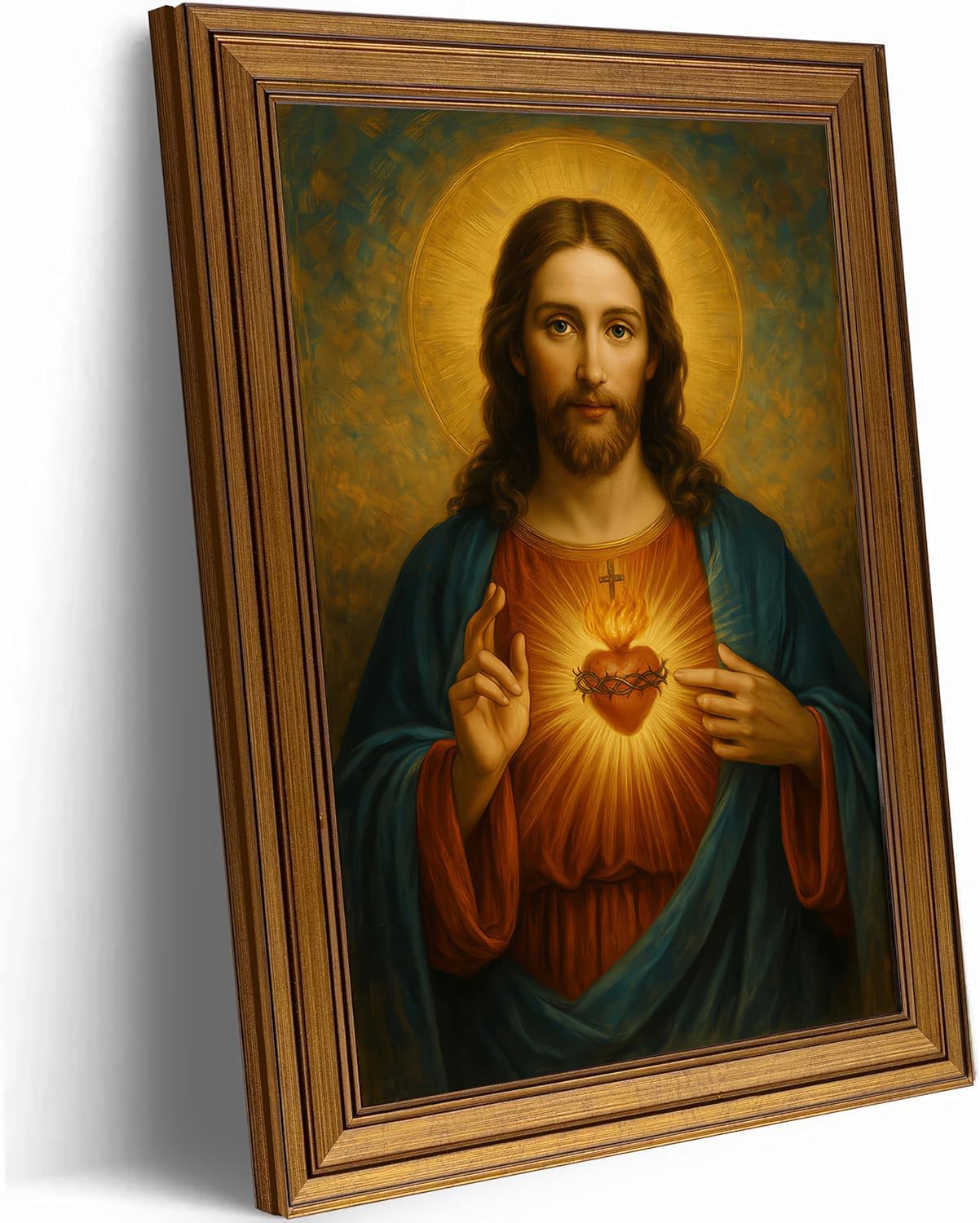


It can be helpful to picture where, in your own home, such a painting might feel most natural: near a table where you pray together, above a small shelf with a crucifix and candles, or in a hallway where everyone passes before bed. Over time, that spot can become associated with a sense of peace and quiet trust, simply because the image is always there, waiting.