
Jesus in the desert painting
Jesus in The Desert Painting
A quiet image of Christ alone in the desert can become a gentle companion in prayer, especially in seasons when life feels dry, demanding, or very ordinary.
Many of us know what it feels like to walk through our own “desert” seasons: times of loneliness, confusion, or waiting. A Jesus in the desert painting does not make those seasons disappear, but it can quietly remind us that Christ has already gone ahead of us into silence, hunger, and temptation. Just having that scene on the wall can make a simple room feel like a small place of retreat.

This page contains affiliate links. If you click and buy, I may earn a commission at no extra cost to you
I still remember the first time I hung a Jesus in the desert painting in our living room. It was during a Lent when I felt especially tired and spiritually distracted. The image didn’t “fix” anything in a dramatic way, but over time I noticed that when I passed by it, I would slow down a little, breathe, and whisper a short prayer like, “Lord, stay with me in my desert.” It became a quiet rhythm that stayed with me even after that season ended.
Why a desert image of Jesus speaks to everyday life
Scenes of Jesus in the desert are not as busy or colorful as other sacred images. There are usually rocks, sand, sky, and Christ in simple clothing. That very simplicity can be a gift. It leaves space for our own thoughts, worries, and hopes to come to the surface in prayer.
In American homes that are already full of noise, screens, and constant movement, a calm and still image can create a corner of quiet. You don’t have to be deeply knowledgeable about theology to sit with this kind of painting. You can just look at it and be honest with God about how you are doing, knowing that Jesus understands what it means to feel alone, tempted, or uncertain.
For many Catholics, a Jesus in the desert painting naturally fits:
- Over a small prayer table or “prayer corner” in the home
- Near a desk where work can feel draining or repetitive
- In a bedroom, as a reminder at the beginning and end of the day
- In a parish office, classroom, or retreat space
Over time, a familiar image can almost become part of the family’s story. Children might not fully understand all its meaning, but they notice the calm face of Jesus and the wide, open space around Him. Adults may silently connect their own dry moments at work, in marriage, or in prayer with the Lord who chose to enter the desert for forty days.
Placing the painting in your home
When you bring a sacred image into your house, it helps to place it in a spot that naturally invites you to pause. It could be:
- A wall that you pass several times a day
- Above a simple shelf with a candle and a small Bible
- Near a chair where you like to read or pray quietly
- In a hallway where you tend to rush, as a gentle reminder to slow down
Before hanging it, some people like to say a short prayer, such as, “Lord, may this image remind me that You are near in every season, especially the dry ones.” It does not need to be long or formal. Just a sincere request that the painting will help you turn your heart toward God during the ordinary movements of the day.
Living with a Jesus in the desert painting day by day
Having this kind of image on the wall can quietly shape the way we move through our routines. It does not demand our attention, but it is there, steady and patient, whenever we choose to notice it. Over time, a few simple habits can grow naturally around it, almost without planning.
One small habit I fell into was pausing in front of the painting before leaving the house. Some mornings I just looked at Jesus seated on the rock and said, “Help me today,” and that was it. Other mornings, especially when I felt anxious, I spent an extra minute letting the stillness of the desert scene settle my thoughts. Nothing dramatic happened, but I walked out the door a bit less scattered.
Simple ways to pray with a desert image
You do not need special words to pray in front of a Jesus in the desert painting. Here are a few simple approaches that many people find gentle and accessible:
- Silent presence: Sit or stand quietly before the image for a few minutes, without many words. Just tell the Lord in your heart, “I am here with You,” and trust that He is there with you in return.
- Short Scripture: Read a brief passage related to the desert, such as one of the Gospel accounts of Jesus’ forty days, and then look at the painting for a bit, letting the scene and the words speak together.
- Evening examen: At the end of the day, stand before the painting and review your day with God—Where did you feel tired, tempted, or alone? Where did you sense quiet help or strength? You can then offer the whole day back to the Lord.
- Praying for others: When friends or family members are going through hard times, you can hold them in your heart as you look at Christ in the desert, asking Him to stay close to their struggles.
None of these practices need to be rigid. Some days you may have just a few seconds; other days you might feel drawn to stay longer. The painting is simply there to help you remember that Christ has walked through the harshest places and is not afraid of yours.

How style and materials can support prayer
When you choose a Jesus in the desert painting for your home, small details like color, size, and framing can influence how it feels in your space. These are practical decisions, but they can gently affect how easy it is to pray with the image.
Color and atmosphere
Many desert images of Christ use soft, earthy tones: sand-colored browns, muted blues, and warm grays. These colors tend to sit quietly on a wall instead of shouting for attention. If your home is already full of strong colors, a more neutral painting can act like a visual rest.
On the other hand, some paintings highlight the sky with deeper blues or touches of gold, suggesting early morning or evening light. That can make the image feel like a moment of transition—fitting for times when your own life feels like it is between “before” and “after,” not fully one thing or another.

Size, framing, and placement
A larger painting can become the main focus of a room, especially in a living room or dining area where the family gathers. A smaller piece might feel more personal and intimate, suitable for a bedside table or a quiet corner.
Simple frames usually serve sacred images well. A plain wooden or neutral-colored frame keeps the attention on Christ rather than on decoration. Some people like to keep the frame very minimal, while others choose something a bit more traditional to match other religious art in the home.

Lighting also matters. If possible, place the painting where it catches gentle natural light during the day, but not direct sun that might cause fading. In the evening, a nearby lamp or a small candle on a safe surface can bring out the warmth of the image and invite you to pause before bed.
Using the painting through different seasons of the year
A Jesus in the desert painting can stay on the wall all year, but it can feel especially meaningful in certain liturgical seasons. Even without changing much in your home, you may find that the image “speaks” differently as the Church year moves forward.
During Lent and times of penance
Many Catholics naturally think of the desert during Lent. Some families place their Jesus in the desert painting in a more central spot during these weeks, perhaps adding a simple purple cloth, a Bible, or a small bowl of smooth stones beneath it.
One Lent, our family made a quiet habit of gathering in front of the painting on Friday evenings. We kept it very simple—a short reading from the Gospel, a moment of silence, and then everyone sharing one small intention from the week. The painting helped the kids visualize Jesus’ own time of trial while we shared our own “little deserts.”

In ordinary time and everyday routine
Outside of Lent, the desert scene can still be a quiet companion. Everyday life has its own dryness: long commutes, endless emails, caring for children or aging parents, balancing bills and worries. Seeing Jesus calmly seated in that stark landscape can remind you that He is present not only in obviously “holy” moments, but also in long, uneventful days.
Sometimes I notice the painting most when things are not dramatic at all—just dishes, laundry, and another ordinary evening. In those moments, I remember that even Christ spent long stretches of time in silence and waiting, without anyone clapping or noticing. That thought brings a kind of peace to simple tasks that no one sees.
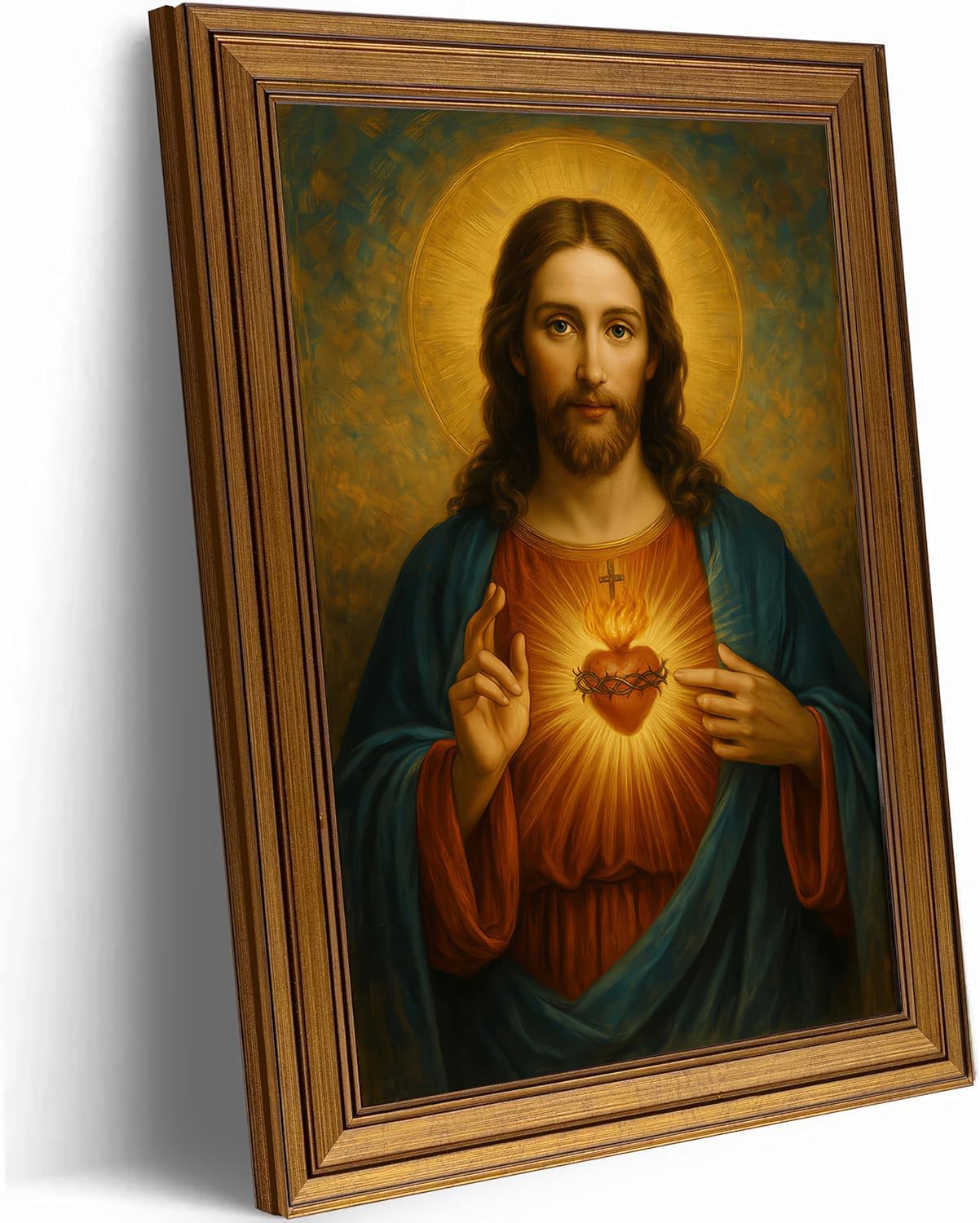
Supporting those who are suffering
A Jesus in the desert painting can also gently support people going through grief, illness, or other heavy burdens. When words are hard to find, the image itself can say, “You are not alone. Christ has walked through harsh places too.” Some families choose to place the painting somewhere visible to someone who is sick at home, as a soft reminder of companionship.
If a friend or relative stays in your guest room during a difficult season, having such an image on the wall can quietly offer them a place of prayer without any pressure or expectation. They can look at it, or not, as they choose. The painting simply stands there, steady and patient.
Questions about having a Jesus in the desert painting
Is it appropriate to hang a Jesus in the desert painting in any room of the house?
Yes, it is generally fine to place this kind of image in any respectful space of your home. Many people choose common areas like the living room or dining room so that the whole family can see it. Others prefer more personal places such as a bedroom or a dedicated prayer corner. The key is to treat the image with reverence, avoiding locations where it might be exposed to clear disrespect or damage, such as directly above a trash can or in a very messy spot.
How can I introduce this image to children without overwhelming them?
You can keep it very simple. When you hang the painting, you might gather the children and say something like, “This picture shows Jesus in the desert. He spent time alone with God and understands when we feel lonely or when things are hard.” Then invite them to say one small prayer, even just “Jesus, stay with us.” Over time, kids often come up with their own questions or comments when they pass by the painting, and you can respond gently, without pressure.
Do I need special prayers to use a Jesus in the desert painting well?
No special prayers are required. The painting is there to help you remember Christ and turn your mind and heart toward Him. Short, honest prayers like “Lord, help me,” “Be with my family,” or “Give me strength in this dry time” are enough. If you like, you can also use familiar prayers such as the Our Father, Hail Mary, or Psalms while looking at the image, but there is no strict rule you must follow.
What if having a Jesus in the desert painting stirs up difficult emotions?
Sometimes sacred images touch tender places in our hearts. If the painting reminds you of painful experiences or deep loneliness, you might bring those feelings into prayer, simply telling God how you feel in plain words. If the emotions are very strong, it can also help to speak with a trusted friend, spiritual director, or counselor. There is no shame in moving the image to a different room for a time if that serves your peace. The goal is not to force yourself, but to walk gently with the Lord.
Can I give a Jesus in the desert painting as a gift, and how should I explain it?
Many people do offer this kind of painting as a thoughtful gift, especially during Lent, for housewarmings, or when someone is facing a difficult season. When giving it, you might say something like, “I thought of you because this image shows Jesus staying faithful in a hard place. I hope it can be a quiet reminder that you’re not alone.” You do not need to say more than that. Let the person receive the gift in their own way and in their own time.

If you sense that a Jesus in the desert painting might support your own quiet walk with God, you can take your time exploring different versions, sizes, and styles until one seems to sit peacefully in your heart and in your home.